
WHY I LEARNED JAVA?
package OOPS;
import java.util.Scanner;
import java.util.Array;
public class World{
public static void main(String args[]){
    System.out.println("Hello bloggers");
}
}
Introduction
First, let's talk about why I started learning Java. You might be expecting answers like Memory Security, Platform Independence, or Backend Development. However, my journey began in a slightly different way. I chose to learn Java because one of my favorite tech YouTubers, Kunal Kushawa, had a Data Structures and Algorithms (DSA) playlist based on Java programming rather than the traditionally prefered C++. After just two weeks, I realized that Java is a beautiful language with numerous industry applications. It might seem a bit intimidating at first, but trust me, once you grasp the inner workings of its inbuilt methods, classes, and datatypes, you'll see how extraordinary this language is.
Tips for New Learners
If you're reading this blog, there's a high chance you're an engineering student from India who learned C and C++ in your college course. So, why am I suggesting you choose Java? Well, I don't!!
You don't have to learn Java if you plan to pursue a career in systems programming, game development, embedded systems, high-performance software (e.g., real-time simulations, graphics engines), or low-level programming (e.g., operating systems, device drivers).
But if your goal is a career in web development (backend), Android app development, enterprise software, or big data processing, then I highly recommend learning Java.
Remember that both languages have their pros and cons, and there's no definitive "better" language. It all depends on your interests. Personally, I find Java more beautiful than C++.
Code as many hours possible to Build a Strong Foundation. There is no fixed amount of time how much you should code. Code till your fingers hurt.
Follow Kunal Kushwaha's YouTube channel to learn Java and Object-Oriented Programming (OOP).
Learn the internal workings of things, not just the syntax. This is how you'll truly grasp OOP concepts. And don't give up if you don't understand something, it's just the learning process and it takes time.
BUILD PROJECTS AND CONTRIBUTE TO OPEN SOURCE. YES YOU CAN MAKE OPEN SOURCE CONTRIBUTIONS ONLY AFTER LEARNING BASIC JAVA. TAKE THIS FIRST STEP NO MATTER HOW SMALL IT IS.
Things That Make Java Special
Memory Management:
Java uses automatic memory management through garbage collection, reducing memory-related errors.
C++ allows manual memory management, which can be more efficient but increases the risk of memory bugs.
Platform Independence:
Java's "Write Once, Run Anywhere" philosophy is achieved through the Java Virtual Machine (JVM).
C++ code is platform-dependent and requires recompilation for different platforms.
Also, keep in mind that Java lacks concepts like pointers and contiguous memory allocation found in C or C++. It doesn't support operator overloading or call by reference. Java may be slower than C++ due to its heavy Object-Oriented nature.
Conclusion
I enjoyed coding in Java, and now I'm diving into backend web development and learning DSA. When understanding OOP concepts, focus on logic building rather than memorizing syntax. Try building projects like Chess and Blackjack after learning the basics. In my next vlog, I'll share my Chess-building journey and provide the GitHub link for you to contribute. If you're comfortable with C++, there's no rush to learn Java immediately.
Happy Coding and Have Fun!
Here's a Picture to Get You Started:
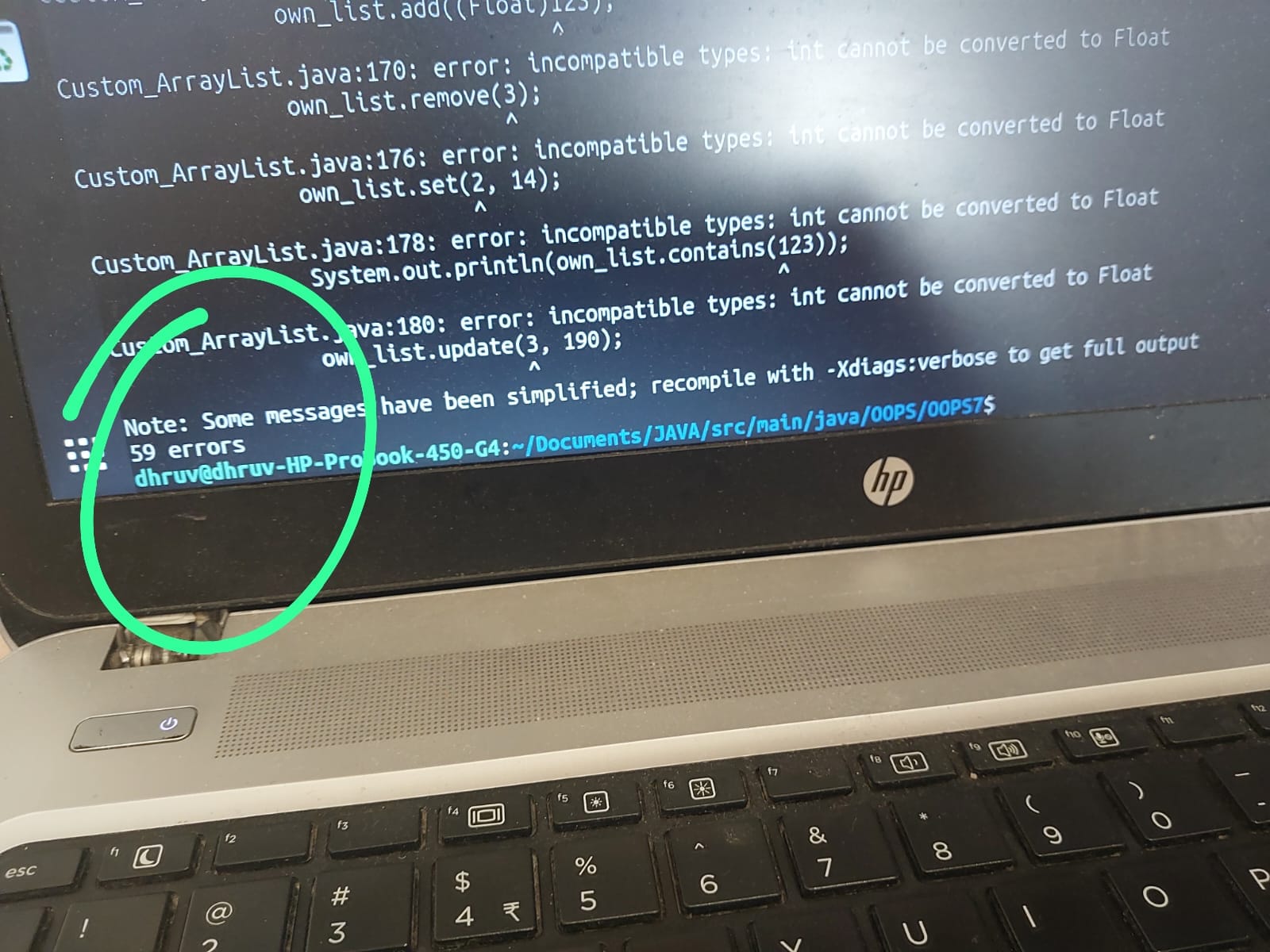
SPECIAL THANKS TO: My Teacher Kunal Kushwaha
Every single word was explained in boundless depth.
Comments
Join the discussionNo comments yet. Be the first to comment.